29 October 2026
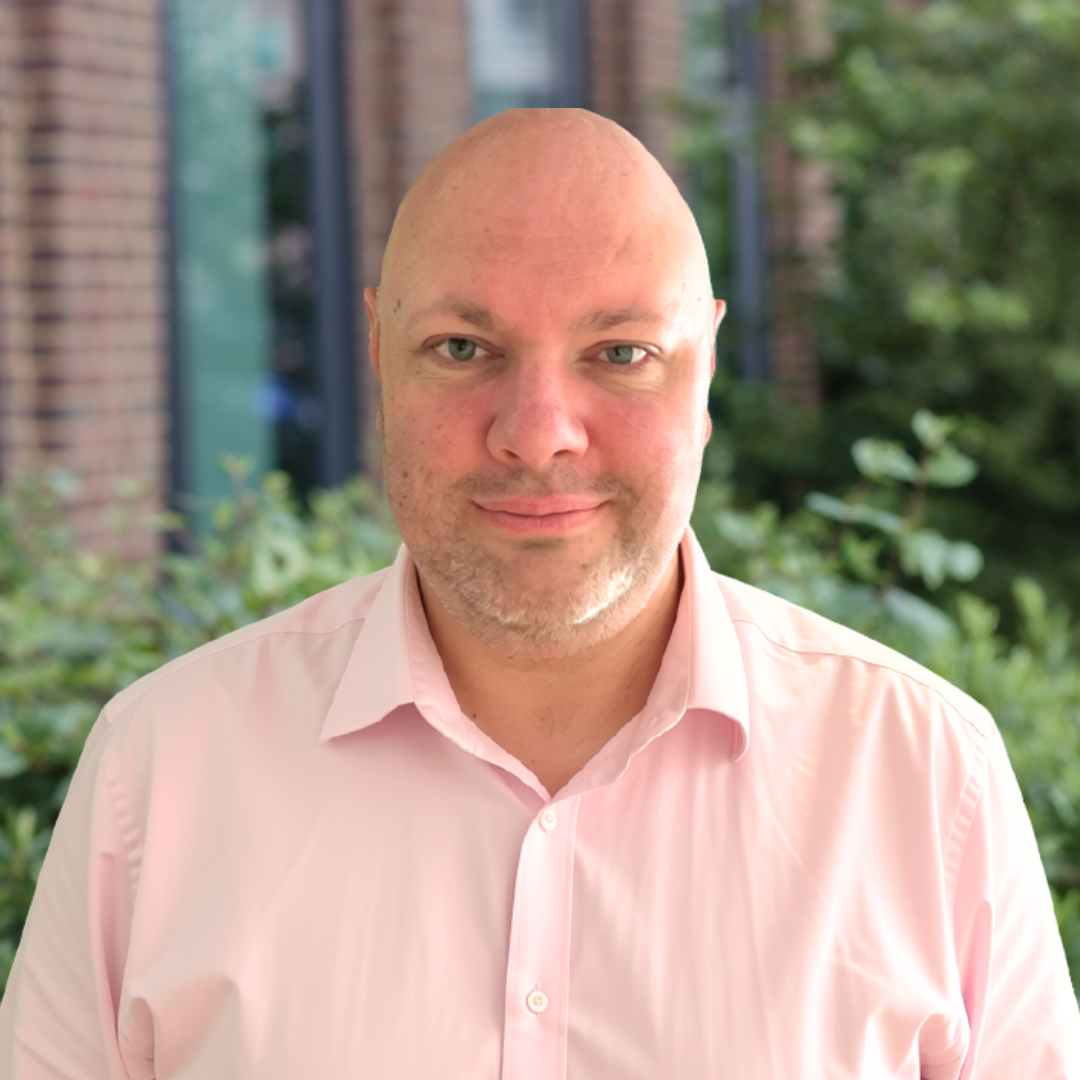
We are delighted to have Richard Heeks join Anderson Quigley, where he will further strengthen our commercial education practice as we continue investing in experienced sector specialists who understand the rapidly evolving education landscape.
As part of Richard’s onboarding process, we caught up with him to ask a few questions about his background and future plans at AQ.
Tell us a little about your background?
I grew up in Stoke-on-Trent and have always been proud of the city that gave the world Wedgwood, the Spitfire designer, and Robbie Williams. From a young age, I was fortunate to travel, and my interest in new countries and cultures (plus my love of talking and cryptic puzzles) is probably why I read Modern Languages at university. After several years in my early 20s running a translation business in Munich, I returned to the UK and decided to explore the world of executive search. As a newly minted Researcher, I really enjoyed applying myself to tricky searches and thinking laterally to find solutions. As a Partner, it’s a privilege to advise clients and to find the senior executives and board members who will shape and grow their organisation for years to come.
Why did you decide to join AQ?
I was taking a short career break following some very heavy family caring responsibilities when Ed, one of our Managing Partners, called for a catch-up. Ed and I had worked together much earlier in my career and stayed in touch. We talked at length about the changing Education market and found our thinking to be closely aligned. I then had the opportunity to spend time with a wider range of AQ colleagues, and I was struck by the integrity and friendliness of everyone I met. As a younger company, AQ takes a fresh look at opportunities, pours huge energy into delivering great outcomes, and places a high value on client and candidate relationships. I had an exciting business plan and wanted to find the right place to deliver it. AQ was an obvious match.
What will your focus be at AQ?
The short answer is commercial education. The longer answer is that I have a lot of experience in two separate strands. One is research commercialisation, where fundamental research is developed towards commercial application by organisations that sit at the nexus of academia, government, and industry. I’ve appointed Chairs, Board Members and CEOs for university Tech Transfer Offices (TTO) and for standalone Research & Technology Organisations (RTO), and I find this work both intellectually challenging and rewarding. The other is the very broad range of commercial businesses that supply or partner with the public education sector. These include international pathways, English language teaching (ELT), exams & assessment, online programme management (OPM), work-based learning (WBL), and EdTech. My expertise sits very neatly between AQ’s existing commercial education capabilities, which include independent schools and for-profit HE providers.
Where do you see the future of commercial education heading?
This is an entire academic paper in itself! What’s clear is that the traditional model of publicly funded HE in the UK is under pressure, through a combination of multiple factors that include demographic shifts, government visa policies, tuition fee caps, increased private provision and international competition, and graduate employers offering school-leaver apprenticeships. The sector is responding in different ways. Some are predictable, such as mergers, but increasingly we are seeing public universities partnering with the commercial sector. For example, many institutions use pathway providers to grow their international footprint and drive increased recruitment, while OPMs offer a way to put profitable courses online. In some cases, commercial education is competing directly with the public sector, which we see in the growing raft of for-profit HE providers and even the recent acquisition of a public university by an investor-backed business. Where research commercialisation is concerned, UK universities invest billions into it annually, while the new National Research Organisations Group demonstrates a much more joined-up approach across the sector. How exactly commercial education will look in five or ten years’ time remains to be seen, but it’s here to stay.
Your work expands internationally. What differences do you see in the UK market and abroad?
The UK has always had a world-class HE system, and that continues to be the case. There are a lot of similarities in the way that public HE systems operate across Commonwealth countries, particularly Canada, South Africa, Singapore, and Australia. The US also has some superb institutions and areas of excellence in research commercialisation, though the funding and execution is very different. The main difference that is relevant to my work in commercial education is the extent to which other countries’ political systems facilitate partnerships between public and private institutions. For example, Germany and the Netherlands offer significant opportunities for commercial education businesses, whereas the Scandinavian countries tend to be more circumspect.
What do you enjoy doing in your spare time?
I have a very needy rescue dog, who is a total delight and rewards my affection tenfold. I also love exploring less-visited countries, visiting quirky museums, picking up bargain antiques, swimming in lidos, going to concerts and musicals, and driving my collection of 80s sports cars and super saloons. The less said about my vintage buses, the better.