4 December 2025
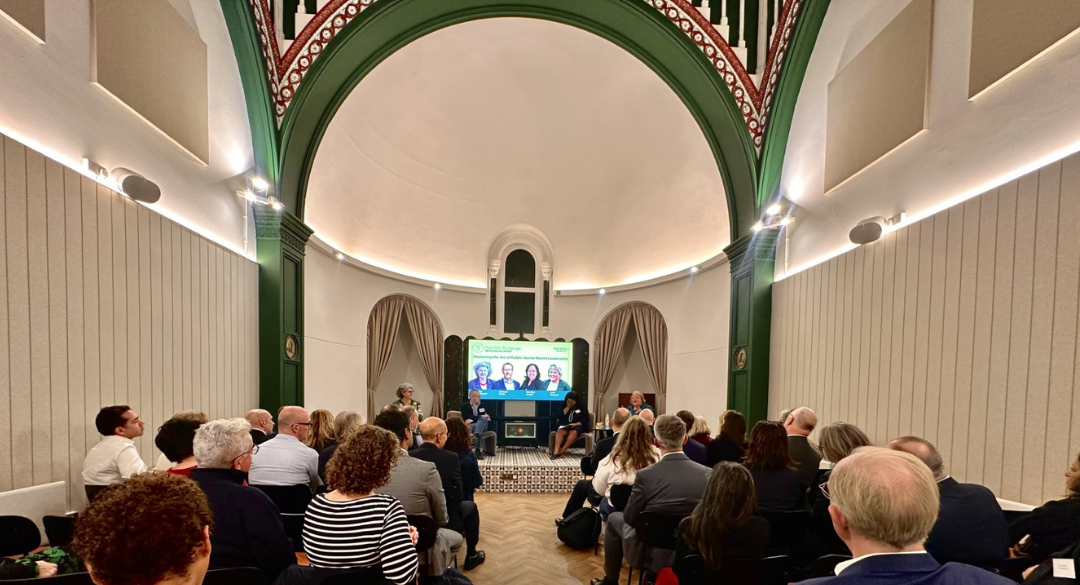
Last week we held our most recent NED Exchange event which brought together an inspiring group of experienced leaders and aspiring non-executive directors for an evening of candid discussion, practical advice, and networking opportunities. Chaired by Helene Usherwood, the event focused on the realities of governance, the journey to board roles, the transition from executive to non-executive roles, and what it takes to succeed in today’s boardroom, shared by our brilliant pannelists:
How do you get started?
Our evening began with our speakers discussing the evolution of their careers, for some this happened by chance rather than by design. Michael reflected on his early days as a college governor, which evolved into chair roles and trusteeships, which all began with a desire to connect with his local community and do more. Nicolina described how networking and volunteering opened doors to a portfolio career and brought her from her initial career as a lawyer to being a full portfolio-non executive. Julia spent time in both the public and private sectors, sharing that she got to where she is today by being “laser-focused” joining groups, taking courses, joining webinars and leveraging mentorship to find her success.
Helene reminded us that resilience is key and that practically speaking, networking and using LinkedIn are also helpful tools for those just starting out.
The shift from executive to non-executive mindset is key
Julia and Nicolina shared their experiences overseeing appointments processes and how there can be hundreds of applicants. The main reason many don’t make it past the shortlist? A poorly written covering letter. Whether it was only a quarter of a page of text or written using the completely wrong language, both panelists agreed that this immediately took the candidate out of the running.
Julia said “There’s a difference in exec vs non-executive language, and the people who succeed use non-executive language, they apply all of their executive examples in a non-executive way.
Nicolina elaborated, “The NED mindset should be about looking forward, where are we going? What’s the vision? The executive focuses on the present, that’s the difference.” She described her own path, joining groups and webinars to learn how to evolve from executive to non-executive, “I call it a NED-ucation. You need to understand the board, the behaviours, the expectations of you.”
Michael offered his perspective of how the various roles in ones career are all valuable, “the key thing is how you bring them to a non-executive role. Take those executive experiences and skills and apply them to that non-executive mindset.”
Bringing a recruiting point of view into the mix, Helene said “.. to achieve that translation from executive to non-executive language, read through job descriptions and person specifications and job adverts, you’ll start to pick up on core themes and language, which you can utilise in your own CVs and supporting statements to describe some of your experiences.”
Now that you know what to do, here’s what not to do
After asking about red flags seen in interviews, Julia mentioned how even the most basic manners can be overlooked “I’ve had some use foul language which is a red flag” she said “and at a recent interview, one applicant kept interrupting the chair and it didn’t feel right to me. I kept thinking, ‘how would that fit in with the board?’
What to do to get to where you want to be
The conversation shifted to Chair appointments, Michael confessed that being a Chair can be difficult, likening it to a team sport and being the one to discern which skills you need to fill out the team when choosing Governors. “So I think about it in terms of at the base you’ve got your subcommittees; specialist people who can help within different contexts the organisation is trying to work within to then come together as a team at the main governing body.”
Nicolina said, “You have to take a step back and look at it in a much bigger picture, who are the key stakeholders? Because this person is likely going to be the face of the organisation.”
Time for a Q&A
The audience got the chance to ask our panel their questions and when asked about how to truly get started as it can be very overwhelming, Nicolina advised them to start with an organisation that they genuinely like and are excited to be a part of, “Do something you’re good at and do something you enjoy”. Michael chimed in recommending networking and mentorship while Helene advised seeking out job adverts to distill what is and isn’t right and Julia offered looking into an apprentice programme.
When asked about advice to those who are seeking to expand their portfolio to different sectors, Julia reiterated the important of developing examples from your career but always through a non-executive lens. Helene agreed, urging the audience not to be bound by sectors that they know “If you don’t come from the sector in which the role sits, you can do research and demonstrate awareness and communicate how you can bring real value from outside”
Final thoughts and takeaways
Becoming a NED is a journey that requires resilience, curiosity and strategic thinking. Whether you’re starting out or aiming for a chair role, the advice was clear: invest in your development, leverage your network and never underestimate the power of persistence. Shift your mindset. Nail your application. Network with purpose.
Helene has established Anderson Quigley’s Board Practice, working across all sectors to appoint Chairs and Non-Executive Directors. She has developed excellent networks across the public and private sectors to encourage greater levels of diversity around the Boardroom table. As well as providing bespoke services, advice and guidance to her clients and candidates, Helene is highly motivated to provide careers advice and guidance to individuals, especially to those who have not previously considered a non-executive opportunity before but who have unique insights and skills to offer.
You can connect with Helene Usherwood on Linkedin or send her an email.