4 November 2026
Ahead of the THE Arab Awards, Hugh Martin has been speaking with those shortlisted for the AQ-sponsored Leadership and Management Team of the Year Award, hearing the stories behind their submissions and learning more about the people, ideas and achievements making a real difference across higher education. It’s a great opportunity to hear directly about their work and share the impact they’re having across the sector.
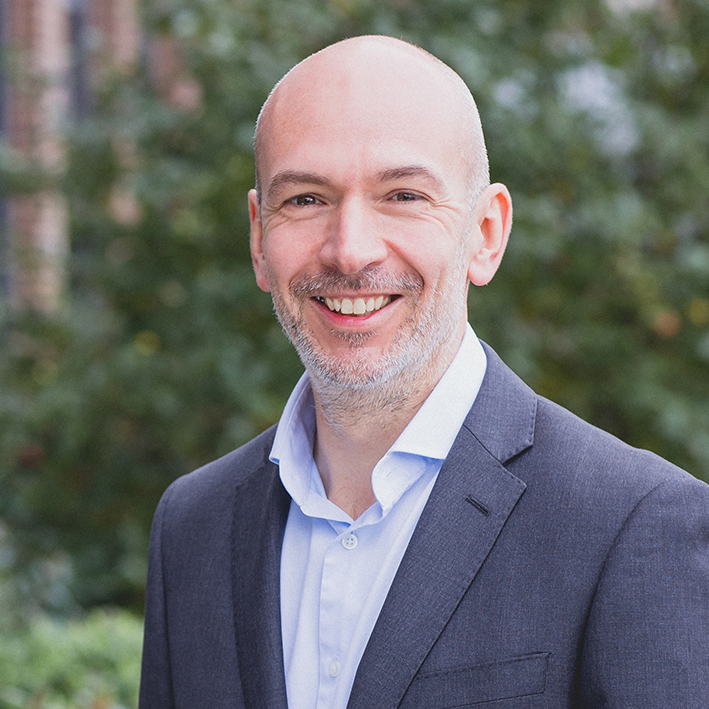
In his conversation with Hugh, Dr. Ian Campbell, Senior Vice President, National Transformation Institute (SVP, NTI) at King Abdullah University of Science and Technology (KAUST), reflects on how the university is strengthening the connection between research, innovation and national priorities, and why collaboration, focus and a willingness to experiment are central to its approach.
For KAUST, research is at the heart of everything it does. As a postgraduate-only, research-intensive university, its focus is not simply on producing excellent science, but on ensuring that research can translate into meaningful outcomes for Saudi Arabia and beyond.
Connecting research with real-world impact
A pivotal moment came in 2023 with the development of KAUST’s Accelerate and Impact strategy and the establishment of its National Transformation Institute (NTI). Created as an external-facing arm of the university, NTI helps translate research, provide consultancy, develop spinouts and start-ups, and bring together large-scale projects aligned with the Kingdom’s needs.
The aim has been to bring greater structure and focus to the university’s work, strengthening engagement with stakeholders and creating the conditions for more effective collaboration. With more than 200 faculty members, KAUST recognises that it cannot deliver on its ambitions alone. Working with ministries, government bodies, industry and other research institutions is essential to tackling challenges at scale.
Importantly, the relationship with government is not simply a top-down process. KAUST brings forward ideas and potential solutions, drawing on the credibility it has built through 17 years of research and scientific output. That trust creates space for meaningful dialogue about where the university can make the greatest contribution.
Focus, discipline and the confidence to experiment
Innovation is difficult to predict, and there is no single formula for turning research into commercial or societal impact. KAUST’s approach has therefore been to create room to experiment, while applying greater discipline to the projects it chooses to support.
Rather than spreading resources too thinly, the university is increasingly focused on areas where it has genuine strengths, can bring together the right partners and has a realistic opportunity to develop scalable solutions. Competitive processes help ensure that ideas are assessed on their potential impact and outcomes, while projects that are not progressing can be stopped. This also means being more selective about intellectual property and commercial opportunities, rather than pursuing every possibility. The university is now developing joint ventures and new commercial relationships, sharing risk and bringing external partners into the process to help accelerate progress. One example is the creation of the Kingdom’s first deep-tech company, marking an important step in its approach to commercialisation.
Building a wider innovation ecosystem
While Saudi Arabia has considerable ambition, talent and financial resources, one of the challenges identified is the need to continue developing the wider innovation ecosystem – KAUST sees collaboration as central to this, both within the Kingdom and internationally.
The university works alongside other institutions and specialist research organisations to provide access to expertise and talented students, while helping to build the critical mass needed to strengthen Saudi research and innovation more widely. As Ian puts it, the priority is to collaborate now in order to compete more effectively in the future; universities are well placed to bring different organisations together – they are trusted, knowledge-led institutions that can convene partners around shared challenges without competing with them in the same way as commercial organisations might.
This role is becoming increasingly important as governments reassess their research and development priorities. Food, water, energy, health and national security are likely to remain significant areas of focus, while developments in artificial intelligence and other emerging technologies create new opportunities. The university also sees scientific publications and research trends as useful indicators of where technologies and future challenges may be heading.
Leadership through change
Ian acknowledges that KAUST’s progress has involved plenty of experimentation, including initiatives that have not worked as intended. The important thing, however, has been creating a culture where the university can learn, adapt and refine its approach.
The transition from a research powerhouse towards a model that places greater emphasis on translation and innovation has required changes in priorities, relationships and ways of working. It has also relied on a committed team prepared to take on difficult challenges and sustain progress over time – for the leadership team, recognition through the THE Awards would be a significant boost.
Much of the work involved in developing new initiatives and delivering long-term change happens behind the scenes, and being shortlisted provides an opportunity to recognise the collective effort involved. Regardless of the eventual result, the nomination is seen as acknowledgement of three years of progress and a reminder that the university is moving in the right direction.
The importance of purpose and partnership
Having joined KAUST from Innovate UK, Ian reflects on how the university’s strong sense of purpose made the transition into higher education particularly rewarding. Its founding focus on food, energy, water and the environment, alongside its commitment to applied research, provides a clear foundation for its work. The values around impact and outcomes are familiar, but the university environment offers a different opportunity: to bring together talented researchers and give them the freedom to explore how their work can address real-world challenges.
Looking ahead, partnerships will remain central to KAUST’s ambitions. The university’s experience demonstrates that research excellence is an important starting point, but translating that excellence into wider impact requires focus, trust and the ability to work across institutional and national boundaries. Ultimately, its approach is built on a simple principle: universities can play a powerful role in bringing people and organisations together to develop knowledge, find solutions and help shape the future.