
19 February 2026
Last month, the UK Government launched its refreshed International Education Strategy, reigniting discussion around the role of FE colleges in global markets. While international engagement has traditionally been more closely associated with schools and universities, the new strategy explicitly includes FE colleges as part of the UK’s broader international education offer.
The government aims to increase education exports from £32bn to £40bn by 2030, while strengthening the UK’s global standing. Jointly owned by the Department for Education, the Department for Business and Trade, and the Foreign, Commonwealth and Development Office, the strategy forms part of a wider plan to drive economic growth and expand the UK’s international influence.
The strategy clearly encourages FE colleges to explore and expand into new international markets – but what are the implications for colleges?
Although the UK distinguishes between FE and HE, many international systems do not, which creates opportunities, but also challenges. The in-country delivery of UK qualifications has been attempted before in FE, with mixed results. College leaders are all too aware of high-profile examples where ventures faltered. A partnership-led approach is likely to be more resilient, cost-effective, and sustainable.
The British Council, already a key global partner for universities, could play a similar role for colleges. Government backing should help de-risk aspects of international delivery, and in some cases, create opportunities for collaboration between FE and HE institutions. However, universities typically benefit from far greater resources and long-standing international networks, giving them a significant advantage. For smaller colleges already under financial strain, international expansion will understandably be viewed as high risk, in-country delivery of UK qualifications has been attempted before in FE, with mixed results. College leaders are all too aware of high-profile examples where ventures faltered led approach is likely to be more resilient, cost-effective, and sustainable.
What does this mean for purpose and community alignment?
Many colleges find it difficult to reconcile international activity with their core purpose of serving local communities. For some, overseas engagement may appear an unnecessary distraction, one that risks diverting attention, capacity, and resources away from local priorities. Boards with strong community representation may therefore be cautious.
Conversely, boards with members who bring relevant commercial or international experience may be more open to pursuing these opportunities, particularly where they support long-term sustainability.
Ultimately, a financially resilient college is better positioned to serve its community, but the risk–benefit balance must be carefully considered in terms of sustainability.
Is leadership and governance a barrier?
Some may see this as a common barrier due to the absence of international experience within college leadership teams and governing boards. Some colleges may prefer to focus on attracting international students into the UK which is a lower risk model, albeit one constrained by accommodation capacity and local infrastructure, not to mention visa and immigration pressures.
International Job: Key Considerations Before Moving | AQ
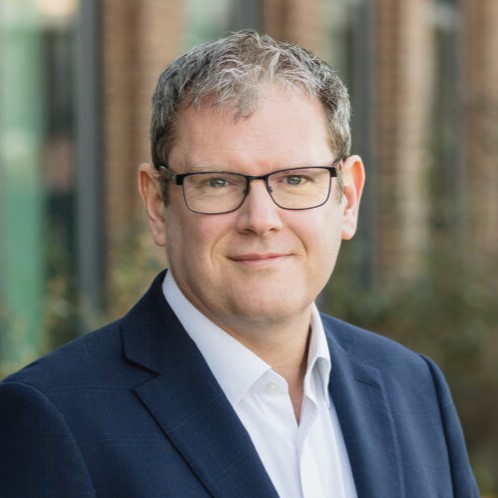
Paul joined AQ in 2024 after ten years at GatenbySanderson and, prior to that, six years at Veredus, all of which has been focused on supporting the education sector. His earlier career was also in education, working in higher education and professional education for ten years. Paul has led on some of the most significant FE/Skills CEO appointments of recent times, including the CEOs of Capital City College, NCG and Warwickshire College Group and the CEOs of the Education and Training Foundation, Student Loans Company, Institute of Apprenticeships and Technical Education and WorldSkills UK. Paul is a Trustee of Bridge Academy Trust, an eleven-school trust in Essex.
You can contact him at paul.aristides@andersonquigley.com or connect with him on LinkedIn.