Appointment of the Chair of the Finance & Resources Committee

Midkent College

Apply now

Welcome

Welcome to MidKent College. As the Chair of Governors, I’m excited to be part of such a fantastic college with a clear and inspiring vision, building an inclusive environment that is creating opportunities for our students and changing lives.

MidKent College is rooted in the communities we serve, and we believe that everyone should have the chance to learn, grow, and succeed, no matter where they come from or the challenges they may face. That’s why we work hard to create the environment and opportunities for students to build their skills and confidence, allowing them to realise their potential and shape their own future.

With my fellow Governors, our role is to support the college’s leadership and make sure we are doing everything we can to help our students and wider community thrive. The dedication and passion here are truly impressive, and I’m proud to be part of a team that’s making a real difference.

We are looking to recruit an experienced financial leader to join our board and to either immediately, or in time, chair our Finance & Resources Committee. With either public or commercial sector experience, we do need substantial leadership experience and ideally experience working at the non-executive level.

For an informal and confidential conversation, please do contact our advising consultants at Anderson Quigley, Paul Aristides or Sophie Rees. Contact details are on this site.

I invite you to discover all MidKent College has to offer. Together, we can continue creating opportunities that transform lives every day.

Peter Fleming
Chair of Governors

About Midkent College

MidKent College is a large further education and training provider serving the communities of Maidstone, Medway and surrounding areas. The College provides education and training for people aged 16 and above, including full-time and part-time technical and vocational programmes, apprenticeships, higher education and professional training. 

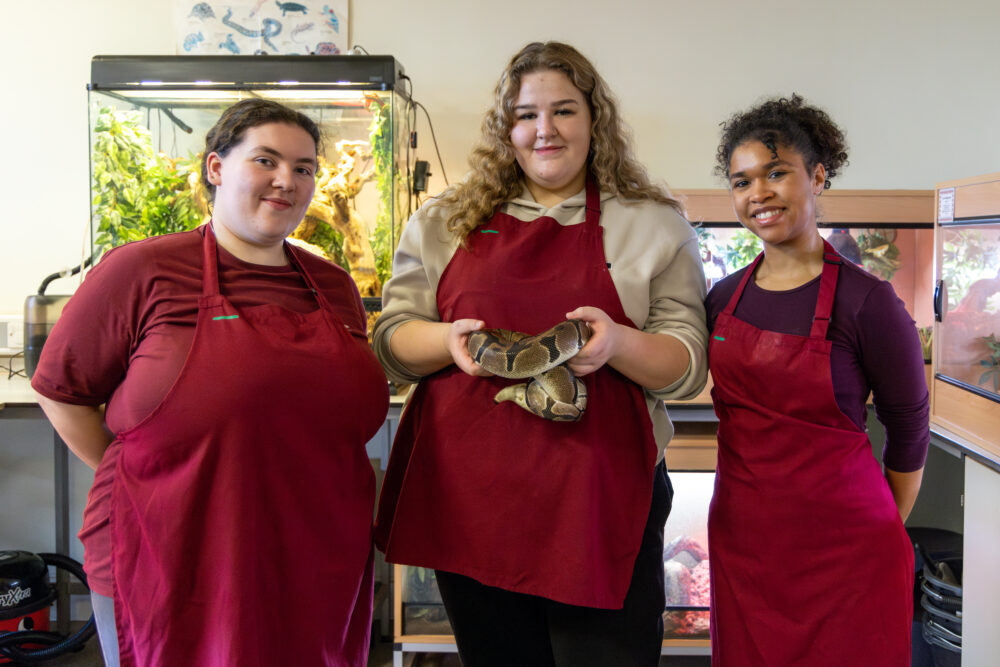
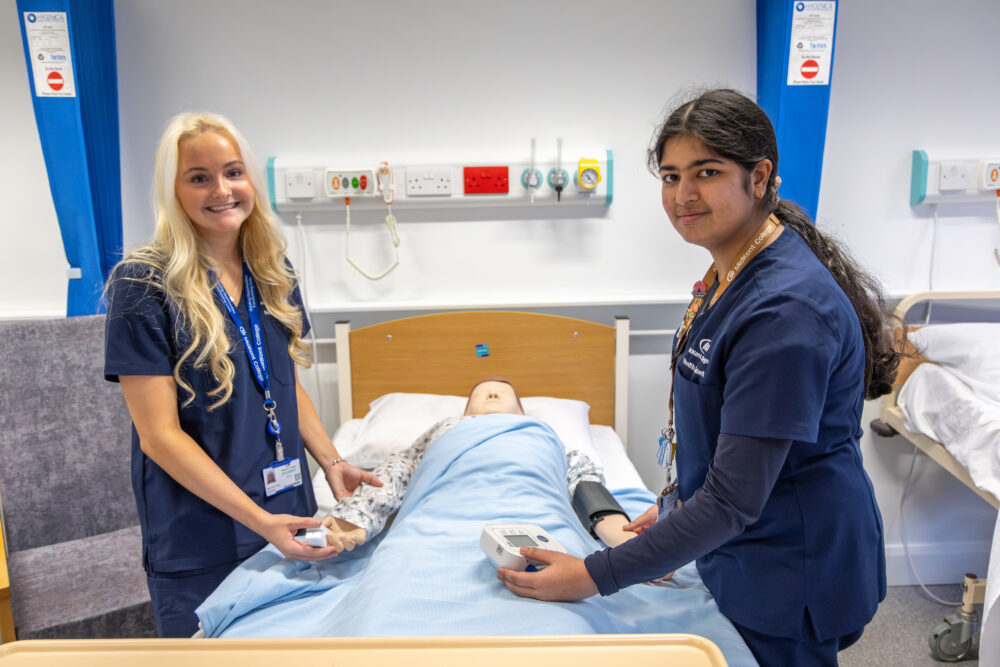
The College operates from campuses in Maidstone and Medway, with specialist facilities designed to replicate real working environments and prepare students for employment and further study. 

More than 7,000 students aged 16 and above enrol each year, including young people, adults and apprentices. 

The College has been providing education and technical training in the local area for more than 100 years, with roots in the technical education institutions established in Medway and Maidstone. 

Our mission 

MidKent College will provide high-quality technical education and training to drive the ambitions and prosperity of the communities of Maidstone, Medway and surrounding areas. 

The College works in partnership with employers and other organisations to ensure students develop the skills and qualifications needed for a changing world of work. 

Our vision 

MidKent College’s ambition is to be recognised as an outstanding provider of high-quality professional and technical education and training, by reputation and by results. 

The College aims to be the destination of choice for students, staff, parents, employers and the wider community, while raising aspirations and contributing to the prosperity of the communities it serves. 

Our values 

Our four core values are: 

  • Resilience 
  • Purpose 
  • Passion 
  • Pride 

These values underpin the behaviours, mindset and approach to teaching and learning expected across the College. 

Quality and recognition 

MidKent College was judged Good by Ofsted following its inspection in October 2024. The inspection rated the College Good for quality of education, behaviour and attitudes, personal development, leadership and management, education programmes for young people and apprenticeships. 

Importantly, adult learning programmes and provision for learners with high needs were both rated Outstanding. 

Equality, diversity and inclusion 

MidKent College is committed to creating an inclusive environment in which students, staff and members of the community feel valued, respected and able to achieve their potential. 

The College’s approach to equality, diversity and inclusion extends beyond legal compliance, with a focus on equality of opportunity, positive relationships and ensuring people are not disadvantaged because of their background or circumstances. 

The College has a long-standing relationship with Investors in Diversity and has also held Disability Confident recognition. 

Sustainability 

MidKent College ZERO is the College’s major sustainability and decarbonisation programme. 

The College has set an ambition to make its Maidstone and Medway campuses net zero by 2030, addressing sustainability across estates and operations, teaching and learning, partnerships, engagement and data. 

The programme has already delivered major changes to the College’s energy infrastructure, including renewable energy generation, heat pump technology, solar installations, and the removal of fossil-fuelled heating. 

ZERO has also attracted significant external recognition. In 2025, the project won the Sustainability category at the Kent Business Awards, the Sustainability and Decarbonisation Business of the Year at the Kent Invicta Chamber Business Awards and a Green Gown Award for Climate Impact. It was also recognised in the Association of Colleges Beacon Awards. 

Our campuses 

Medway Campus, Gillingham
The Medway Campus provides a broad range of technical and vocational education and includes specialist facilities designed around real-world working environments. 

Maidstone Campus
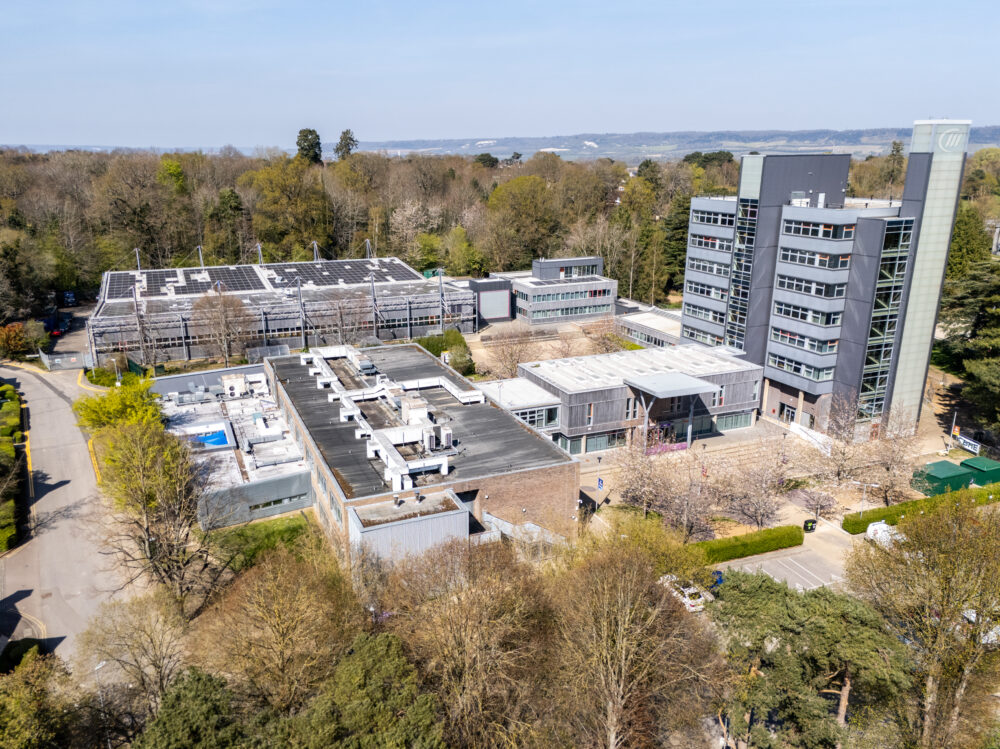
Located at Oakwood Park, the Maidstone Campus has undergone significant redevelopment and investment, including new workshops, student facilities and University Centre Maidstone. 

Industry and employment 

A key feature of the MidKent College approach is the relationship between education and employment. 

Students benefit from industry-standard facilities and simulated working environments, while many teaching staff bring professional and industry experience from the sectors they teach. 

The College works with employers and other partners to ensure its provision reflects the skills needs of the local economy. 

Governance

The governing body of MidKent College is a legal structure responsible for the overall functioning of the College.

In general terms, it is responsible for the quality of service the College offers to students and the local community, as well as the College’s annual budget, health and strategic direction.

Made up of individuals across a range of backgrounds and experience – including two members of staff, two students and the principal/chief executive – the membership reflects the varied communities the College serves. The governing body meets at least five times a year and also has a strategic away day. Four main committees serve the governing body and meet throughout the year.

This area of the College website introduces members of the board and includes a wealth of information related to the governance of the College. Follow the ‘governing body’ link to access agendas and minutes from the main governing body meetings, or the ‘committees’ link for information about the various associated sub-groups. Copies of agendas, minutes, reports, documents and other papers considered at governing body meetings can also be viewed by contacting the clerk to the governing body during normal office hours.

As the governing body of MidKent College, we would like to ensure as much information about the College as possible is available to our staff, students and members of the public. And as the guardians of public funds we recognise the duty we owe to the public to show how we are using their investment.

The College is a significant resource, used by many members of the local community, so we want all our stakeholders to understand how the College operates and how it is governed.

Our Governing Body

It meets at least five times a year and also has a strategic away day.

At each governing body meeting members systematically monitor the performance of the College through various reports including the principal’s update, committee minutes and the College’s key performance indicators.

Copies of agendas, minutes, reports, documents and other papers considered at Governing Body meetings can be viewed by contacting the clerk to the Governing Body during normal office hours.

Anyone wishing to attend Governing Body meetings should put their request in writing to the clerk at least five working days prior to the meeting for the request to be considered by the chairman.

You can learn about our Governors here

The role

Chair of the Finance & Resources Committee (AQ3691)

Apply now

Job description

The following role description and person specification has been developed to help to ensure that Governors have a clear understanding of the role.

Duties of a Governor

The duties of Further Education Governing Bodies are specified in the Further and Higher Education Instruments and Articles, Articles clause 3 (1) a-f (I&AG) which sets out the responsibilities of the Governing Body. Collectively, individual Governors contribute their professional, specialist and general management skills to the Governing Body (and through its Committees) in a non-executive role. A Governor is required to be as flexible as possible in the conduct of his or her responsibilities and duties, ensuring that the balance of oversight of the College and its business is seen as a positive contribution that does not interfere with the day-to-day management of the College.

The primary duties of Governors are to play an active role in the high level strategic planning process of the College by contributing to:

  • the development of the College’s mission, vision and educational character;
  • the development of strategic priorities;
  • the setting of measurable targets to support the College’s development and budget;
  • the monitoring of achievement against objectives; and
  • the development of plans to address major weaknesses.

Play an active role in one or more of the following, as required:

  • overseeing the management of financial, human and physical resources;
  • internal audit and risk management processes;
  • the development of senior post holder pay policy and framework for the pay and conditions of service of all other staff; and
  • the recruitment of new Governors.

Other duties will include:

  • contributing to the regular monitoring of the financial health of the College;
  • complying with the I&AG, the AOC FE Governance Code, the Governing Body’s standing orders and Code of Conduct and any other related governance policies and procedures;
  • contributing to the business of the Governing Body in an effective, efficient, open and transparent manner;
  • allocating sufficient time to undertake Governor duties effectively by attending the following:
    • Governing Body meetings (5 x 3 hours)
    • Committee meetings (3/4 x 2 hours). Committees have specfic remit by which they scrutinise items before they are presented to the Governing Body.
    • Governor away day (one day)
    • Governor Visits throughout the year – Governors are asked to visit the College once per term (3).
    • Induction events as required.
    • Various training and development as available
  • bringing knowledge and expertise to the table and support and challenge the executive by ensuring the students’ interests are put first;
  • getting to know the College through discussion with the Principal and the staff, reading relevant papers, visiting the College regularly and participating in events;
  • participating in the Governor Visits and other such schemes, for example informal classroom/workshop visits;
  • helping new Governors understand their role including mentoring if requested;
  • acting in the best interests of the College at all times rather than selectively or in the interests of a particular constituency. Governors are seen as advocates of the College and must act with honesty, frankness and objectively taking decisions impartially, fairly and on merit, using the best evidence and without discrimination or bias; and
  • Being an ambassador and advocate for the College in the local community.

Governors have collective responsibility for the above, but no Governor has the authority to speak or act on the Governing Body’s behalf unless specifically delegated to do so. Some aspects of the role are confidential.

Governors can only serve for two four-year terms unless there are exceptional circumstances.

Person specification

In seeking to fill any vacancy, the Governing Body endeavours to maintain a balance of skills and experience amongst its membership. The following is a general specification for Governors. External members may also require specific skills as determined by the annual skills audit.

Key skills  Narrative 
Commitment to education  Able to demonstrate a commitment to lifelong learning. 
Interpersonal and teamwork  Able to work positively with others and debate whilst maintaining a constructive atmosphere. 
Communication and ability to influence  Able to express ideas/plans in a clear manner and to listen actively to other views. Able to communicate effectively. 
Planning and organisation  Able to establish quickly an effective course of action for self and others to achieve goals that can be monitored by realistic performance targets. To be visionary for the future plans of the College. 
Drive to achieve and determination  Able to create the required energy/enthusiasm and commitment necessary to be effective and have the tenacity to overcome obstacles. 
Strategic perspective  Able to develop a broad-based view of issues and events and perceive their long-term impact. 
Intellectual and technical ability  Able to absorb sometimes complex information and rationalise appropriately. Able to think laterally and arrive at a pragmatic solution. 
Leadership  Able to demonstrate behaviour and skills that motivate others to achieve, inspire confidence in others to achieve objectives, and respect the views of others. 
Experience  Experience at a senior management level in at least a medium scale organisation and/or an appreciation of issues that affect the senior management role and/or 

Expertise in a field that is of particular relevance to the oversight of the affairs of the College. (Some vacancies may require specific qualifications or a particular skill or experience.) 

Ability to demonstrate a full understanding and appreciation of the principles of governance, including collective responsibility, discharge of fiduciary duties and the 7 principles of public life* 

Circumstances  Available to attend scheduled meetings of the Governing Body and its Committees. 
Equality, Diversity & Inclusion  Committed to Equality, Diversity and Inclusion. Governors to uphold the principles to safeguard the students. Be able to scrutinise equality, diversity and inclusion in all the Board decisions. 


Public concern about the financial probity of members of parliament and other holders of public office led to the setting up in 1994 of the Committee on Standards in Public Life (Chaired by Lord Nolan and later Lord Neill). The Committee drew up 7 principles of public life as a yardstick against which public service may be measured, and the Governing Body abide by. The principles are listed below:

  • selflessness
  • integrity
  • objectivity
  • accountability
  • openness
  • honesty
  • leadership
  • plus confidentiality

Declarations of Interest – Governors will be asked to declare any interests at the beginning of each meeting. These are formally recorded annually on a declaration form and logged by the Clerk for scrutiny by the External Auditors.

MidKent College will provide high quality technical education and training to drive the ambition and prosperity of the communities of Maidstone, Medway and surrounding areas. We will work in partnership to ensure our students have the skills and qualifications for the changing world of work.

Board meetings

Governing Body – in person

  • 10 December 2026 – Medway
  • 12 February 2027 – Away Day (Maidstone)
  • 25 March 2027 – Medway
  • 20 May 2027 – Maidstone
  • 8 July 2027 – Medway

Governor training session – online

  • 17 March 2027 – Governance of AI
  • 12 May 2027 – Legalisation Changes Update (Martyn’s Law)

F&R – online

  • 25 November 2026 – Joint meeting with GR&A followed by main F&R Committee
  • 24 February 2027
  • 5 May 2027 – Joint meeting with QTL to look at Business Planning together followed by normal F&R Committee
  • 30 June 2027

How to apply

Anderson Quigley is acting as an advisor to the College. An executive search process is being carried out by Anderson Quigley in addition to the public advertisement.

The closing date for applications is noon on 12 October 2026

Applications should consist of:

  • A full CV.
  • A covering letter outlining your motivation and details of how you meet the qualification, skills and experience criteria of the person specification.
  • Please include details of two referees in your CV, though please note that we will not approach your referees without your prior consent and only should you be shortlisted.

Should you wish to discuss the roles in strict confidence, please contact Paul Aristides at paul.aristides@andersonquigley.com or Alicja Janowska at alicja.janowska@andersonquigley.com or +44 (0)7743 927 783.

Timetable

Closing Date 12th October
Shortlisting Date 14th October
Final Panel Dates 17th November & possible 23rd November